The European Union research programme focuses on the EU's global and regional role, including the internal dynamics of the Union. The main research themes are the EU's external action, economic policies and institutional development.
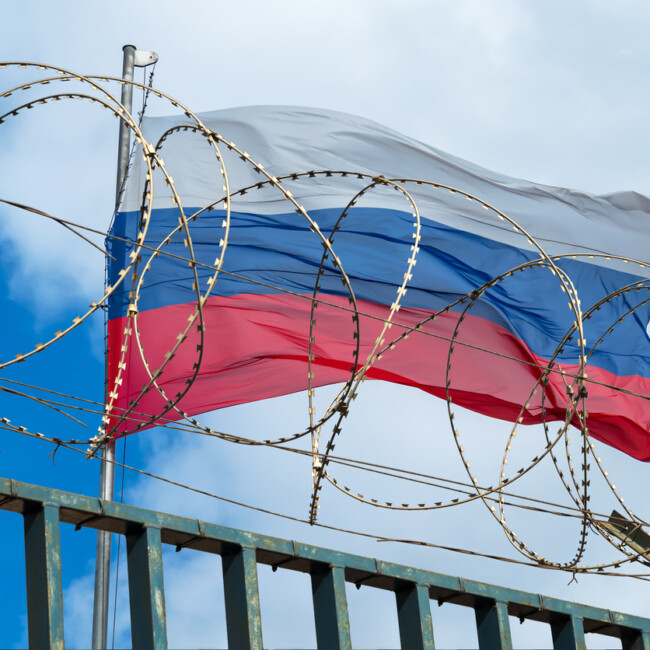
The EU's Eastern Neighbourhood and Russia research programme studies the EU's eastern environment with a special focus on Russia's domestic and foreign policy. In particular, the programme concentrates on political developments in the region, energy and climate policies. It also studies international relations in the EU's eastern neighbourhood and the relationship between the region and the EU.
The Global Security research programme approaches global security challenges within the framework of broad security. The programme seeks to understand the global trajectories of security that have significance for the European and Finnish security environments. The issues approached include the prospects for global governance systems, changes in the major power structure, significant factors in functional and regional security and insecurity, the role of the transatlantic relationship in world politics, and the different dimensions of the European security policy.
The Finnish Foreign Policy project seeks to support foreign policy research in Finland and to arouse international interest in the topic. An online archive of Finnish foreign policy is at the heart of the project. The archive, which consists of speeches and key foreign policy documents, will be launched in early 2012. Another function of the project is to build a network of interested researchers by organising research seminars on Finnish foreign policy. Ultimately, the aim of the project is to stimulate publications in the field.
The “Finnish Perspectives to the European Security Market” research project analyses the Defence and Security sector in the European Union in the aftermath of the Lisbon Treaty. The project evaluates the potential evolution of a more integrated European security market and the growth potential of the Finnish defence industry. The project is designed to produce valuable insights to support the domestic industry, and is implemented as a joint project by the Finnish Institute of International Affairs, the National Defence University and the Finland Futures Research Centre. The duration of the project will be one and a half years and it will be concluded in 2012. The project is led and coordinated by the Finnish Institute of International Affairs and funded by the Finnish Funding Agency for Technology and Innovation.
The Arab Revolutions of 2011 have launched a process of political transition in the Middle East. While it is yet unknown where this process will lead, the transition will fundamentally reshape the countries of the Middle East and their relationship with the outside world. It will also have important implications for the European Union. This FIIA project analyses and evaluates the transition process by monitoring developments in key Middle Eastern countries and reporting on the social, economic and political forces and actors that are at the heart of this transition. Special attention is given to the role of the European Union and its member states within the changing regional environment.
The aim of the Peace Mediation project is to enhance the debate, research and awareness of peace mediation in Finland. The project establishes cooperation networks and organises events which analyse the key questions relating to Finnish peace mediation capacity and tradition, the topical issues of peace mediation, peace mediation as part of Finnish foreign policy, and the role of small states in peace mediation. The project, which is conducted in close cooperation with the Crisis Management Initiative, brings together national and international researchers, experts and decision-makers in the field of peace mediation.
The PROBALT project aims to make the prevention of the Baltic Sea eutrophication more effective in three ways. Firstly, it analyses the societal conditions for the effective protection of the Baltic Sea at three levels: national level, regional level and the European Union level, using an interdisciplinary framework. Furthermore, it examines nutrient trading as an instrument for the more effective combat of eutrophication. Finally, PROBALT seeks to increase national concern about the state of the Baltic Sea in individual countries. This part of the project is achieved by engaging the media and training journalists on the politics of the protection of the Baltic Sea. Also, policy-makers in each country and in Brussels are kept informed about the research results of PROBALT as the project progresses. The goal is to form an advocacy coalition that takes a leading role in promoting the protection of the Baltic Sea.
The premise of the “Securing the Global Flows” project is that there is a vital need to develop a more coherent and up-to-date normative framework concerning access to global commons (maritime, air, space, and cyber) which are central to the global flows of information, trade and people. Securing access to these flows can be seen as crucial for a small state that is relatively more dependent on global fabric due to their more specialised economies. Ultimately, the key thematic behind “securing access to global commons” has to do with the future shape of the underlying global network of interdependence. The project takes place within the US-led Multinational Experiment 7 (MNE 7) during 2011-2012 and is funded by the Scientific Advisory Board for Defence.